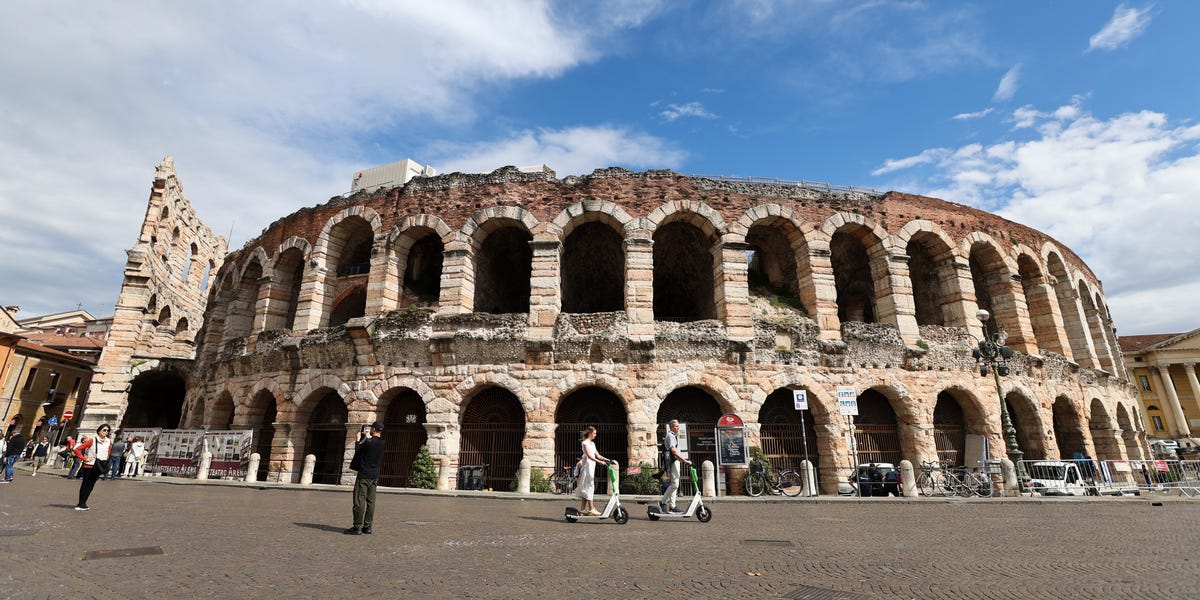
A Timeless Stage: Why Verona's Ancient Arena Hosts the 2026 Winter Olympics Closing Ceremony
As the world prepares for the grandeur of the Milano Cortina 2026 Winter Olympics, one aspect stands out as particularly captivating: the choice of Verona's ancient Roman Arena for the highly anticipated Milano Cortina 2026: Why Verona Became the Unexpected Closing Ceremony Host. This decision not only highlights the unique logistical spread of these Games across northern Italy but also promises an unforgettable spectacle, fusing millennia of history with the pinnacle of modern athletic achievement. From the vibrant energy of Milan to the majestic peaks of Cortina, the 2026 Games are redefining the concept of a "host city," culminating in a breathtaking farewell in a venue older than the Colosseum itself. Let's delve into the compelling reasons why the verona closing ceremony is set to be a historic event.
The Verona Arena: A Monumental Backdrop for a Global Finale
The selection of the Verona Arena is a powerful statement, transforming a nearly 2,000-year-old monument into the stage for a global celebration. Built in 30 AD, this magnificent Roman amphitheater predates Rome's iconic Colosseum by half a century, making it Italy's third-largest and arguably most well-preserved ancient arena. Imagine the collective awe as athletes, dignitaries, and spectators gather within walls that have witnessed gladiatorial contests, grand operas, and countless historical moments across two millennia. It's a venue steeped in grandeur, now fittingly renamed the "Verona Olympic Arena" for its starring role.
This marks a groundbreaking moment in Olympic history: for the very first time, an Olympic Ceremony will be held within a UNESCO World Heritage site. This isn't merely a logistical choice; it's a profound declaration of Italy's commitment to showcasing its unparalleled cultural heritage on the world stage. The Arena's semi-elliptical shape and incredible acoustics, honed by centuries of performances, will naturally amplify the emotional resonance of the closing rites, making every cheer and every note ring true under the February sky. It promises an atmosphere unlike any previous Olympic farewell, where the echoes of ancient history mingle with the triumphs of contemporary sport.
Unpacking the Unique Geographic Tapestry of Milano Cortina 2026
To truly understand the choice of Verona for the verona closing ceremony, one must first grasp the unprecedented geographic scope of the Milano Cortina 2026 Winter Olympics. Unlike previous Games centered around a single metropolitan hub, these Olympics are a sprawling celebration across Northern Italy. The logistics are truly unique:
- Two Host Cities: Milan, the bustling fashion and finance capital, and Cortina d'Ampezzo, the picturesque "Queen of the Dolomites," serve as primary hosts. These two cities are separated by a substantial four to five-hour drive, immediately scattering the traditional concentration of Olympic activities.
- Widespread Venues: Beyond the main hosts, events are distributed across a stunning array of alpine towns. Bormio will host alpine skiing, Livigno will welcome freestyle skiing and snowboarding, while Val di Fiemme and Tesero are set to stage Nordic combined, cross-country skiing, and ski jumping. This decentralized model embraces the natural beauty and existing sporting infrastructure of the region.
- Milan's Indoor Hub: While outdoor events are dispersed among the mountains, Milan acts as the central hub for several key indoor ice arena events, including thrilling ice hockey matches, the blistering pace of speed skating, and the artistic grace of figure skating. The Opening Ceremony itself was fittingly hosted in Milan’s iconic San Siro Stadium.
Given this expansive, multi-location framework, selecting a single, central closing ceremony venue presented a unique challenge. Verona, situated strategically between Milan and the Venetian plains, and offering a venue of immense cultural significance, emerged as the perfect "third city" to draw this complex tapestry of events to a grand conclusion. Its accessibility from various parts of Northern Italy, combined with its world-class heritage site, made it an inspired and practical choice, embodying the spirit of regional collaboration that defines Milano Cortina 2026.
"Beauty in Action": An Artistic Extravaganza Awaits
The verona closing ceremony on Sunday, February 22nd, 2026, isn't just an end to the Games; it's a carefully curated artistic performance titled "Beauty in Action: Inside the Verona Olympic Closing Ceremony Show." This theme promises a profound tribute to beauty in motion across all its forms—from the athletic prowess on display in sport to its reflection in art, its nourishment through human connection, and its manifestation in the very landscapes framing the Games. It’s a celebration designed to bridge the natural grandeur of the mountains with the cultural richness of the city.
Attendees can expect a narrative blending dream and reality, a masterful fusion of tradition and innovation. The show will weave together elements of opera, music, dance, cinema, design, and cutting-edge technology, all drawing deeply from Italy’s unparalleled cultural and artistic heritage. It aims to showcase the powerful balance between Italy's classical roots and its vibrant modernity, demonstrating the creative ingenuity of Italians to transform aesthetics into pure emotion. The Verona Olympic Arena will truly become a boundless stage, inviting both attendees and a global television audience into an immersive storytelling experience.
The lineup of performers already announced hints at the ceremony's eclectic and high-caliber nature:
- Roberto Bolle: The international dance star, a global symbol of elegance, energy, and dedication, will grace the stage with his extraordinary sensitivity and mastery.
- Gabry Ponte: A global icon of dance and electronic music, known for transforming spaces into shared energy experiences.
- Achille Lauro: The Roman singer born in Verona, a contemporary pop icon celebrated for transcending musical boundaries into fashion and performance art.
- Benedetta Porcaroli: The talented actress will contribute to the event's compelling closing narrative.
- Major Lazer: One of the most influential musical groups on the global scene, promising an explosion of rhythm and color.
With these diverse talents, the Verona Olympic Arena will transform into a melting pot of cultures and sounds, where the solemnity of the Olympic moment will harmoniously collide with an electrifying celebration of shared human experience. Thousands of hearts will beat as one under the Verona sky, marking a truly unforgettable conclusion.
Planning Your Verona Experience: Tips for Attendees and Spectators
For those fortunate enough to attend the verona closing ceremony in person, or even to soak in the atmosphere from afar, some planning will be essential. The ceremony is scheduled for Sunday, February 22nd, offering a final opportunity to immerse oneself in the Olympic spirit.
For Attendees:
- Travel & Accommodation: Verona is well-connected by train and road. Book your travel and accommodation far in advance, as demand will be exceptionally high. Consider staying in Verona itself or in nearby towns with good public transport links.
- Access & Timings: Official information regarding specific timings, arena access points, and security protocols will be released closer to the date. Stay updated via official Milano Cortina 2026 channels. Arrive early to navigate security and soak in the pre-ceremony atmosphere.
- Explore Verona: Don't miss the opportunity to explore the enchanting city of Verona itself. Beyond the Arena, visit Juliet's House, the Torre dei Lamberti, and wander through its charming piazzas. The city's rich history extends far beyond its Roman amphitheater.
- Dress Warmly: February in Verona can be chilly. Ensure you dress in layers, with warm outer clothing, hats, and gloves, especially if you have outdoor seating.
For Global Viewers:
- Broadcast Information: Check your local sports broadcasters (e.g., NBC in the USA) for live coverage schedules. The closing ceremony is typically a prime-time event globally.
- Team USA Flag Bearers: For fans following Team USA, expect to see prominent athletes like gold medalist hockey captain Hilary Knight and ice dance silver medalist Evan Bates, who were flag bearers in previous ceremonies, representing the spirit of their nation.
This event promises not just to be a sporting conclusion but a significant cultural happening, setting a new benchmark for how the Olympic Games engage with the world's heritage sites.
The choice of Verona's ancient Arena for the Milano Cortina 2026 Winter Olympics Closing Ceremony is a testament to Italy's ability to blend unparalleled history with modern ambition. It’s a decision born from logistical necessity, artistic vision, and a deep respect for cultural heritage. As the Games draw to a close, the Verona Olympic Arena will not only bid farewell to athletes but also welcome the world to a city where every stone tells a story. This verona closing ceremony promises to be a truly unforgettable event, echoing through the centuries and leaving an indelible mark on Olympic history.